Before applying for food-specific permits, you must set up your legal business structure.
Form Your Business Entity: Register as an LLC, Corporation, or Sole Proprietorship via the California Secretary of State.
Obtain an EIN: Apply for a Federal Employer Identification Number from the IRS for tax and hiring purposes.
Seller’s Permit: Register with the California Department of Tax and Fee Administration (CDTFA) to collect sales tax.
The Health Department is your most significant hurdle. California follows the California Retail Food Code (CalCode).
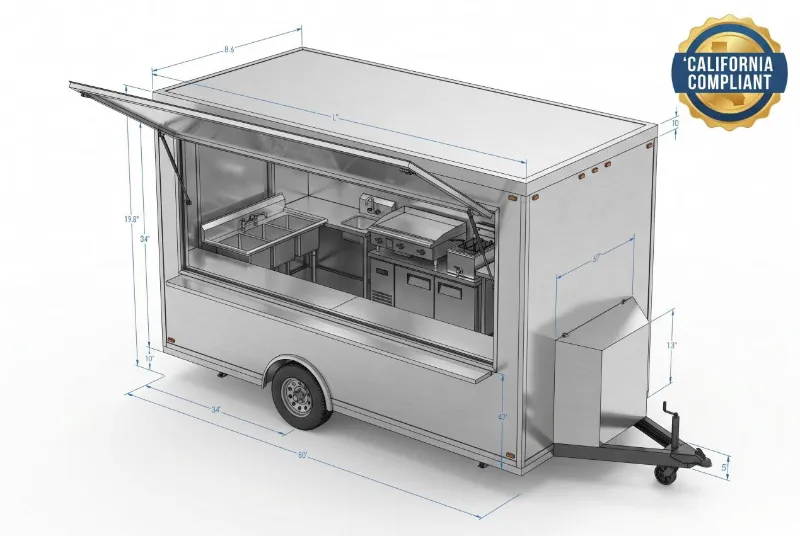
Plan Check Submission: Before manufacturing begins, you must submit your trailer’s blueprints to the local County Environmental Health Department.
Truth Tech Advantage: We provide detailed 2D/3D CAD drawings that include plumbing, electrical, and equipment layouts, specifically designed to meet California Health Department standards.
The Commissary Agreement: California law requires most food trucks to operate out of an approved Commissary (Commercial Kitchen) for waste disposal, water refilling, and overnight parking. You will need a signed agreement to get your health permit.
Unlike many other states, California requires mobile food units to have an HCD Insignia.
This sticker proves that the electrical, plumbing, and structural elements of your trailer meet California’s specific safety codes for mobile dwellings/units.
Note: If you are importing a trailer, ensure your manufacturer understands HCD requirements to avoid costly retrofitting.
California fire codes are rigorous regarding high-heat cooking.
Fire Suppression System: Any trailer with deep fryers or griddles must have a Type I Hood with an automatic fire suppression system (like Ansul) certified by a licensed technician.
LP Gas Inspection: Your propane lines must undergo pressure testing and meet specific venting requirements.
Once your truck is built and health-certified, you need permission to park and sell.
Business License: Required by the specific city where you intend to operate (e.g., Los Angeles, San Diego, San Francisco).
Zoning Clearances: Not all streets allow food trucks. Check local ordinances for "Public Right-of-Way" vending rules.
California Compliance Checklist
Federal EIN & State Business Registration
CDTFA Seller’s Permit
HCD Insignia (Blue Sticker)
County Health Department Permit
Certified Fire Suppression System
Signed Commissary Agreement
Local City Business License
Navigating California’s requirements alone is risky. A single non-compliant sink or an uncertified electrical panel can delay your opening by months.
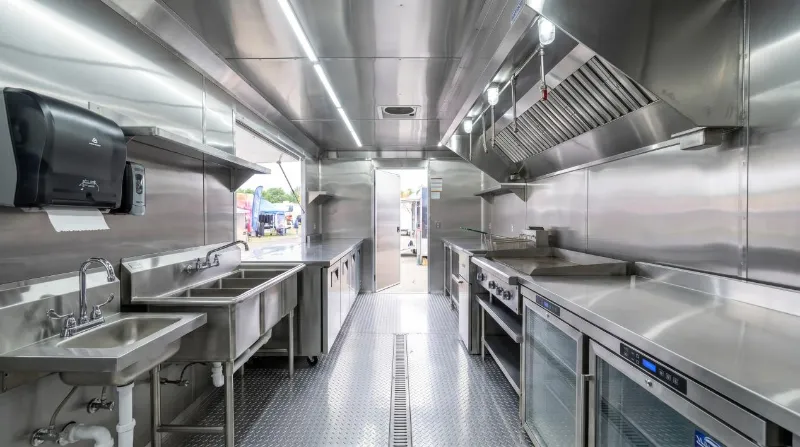
NSF/ANSI Standard Equipment: We use only certified commercial-grade appliances.
Custom Plan Support: We provide the technical documentation your local health inspector needs.
Global Shipping & Logistics: We handle the paperwork to ensure your trailer arrives at the port ready for California roads.
Contact our California Compliance Team today for a Free Consultation and 3D Quote!