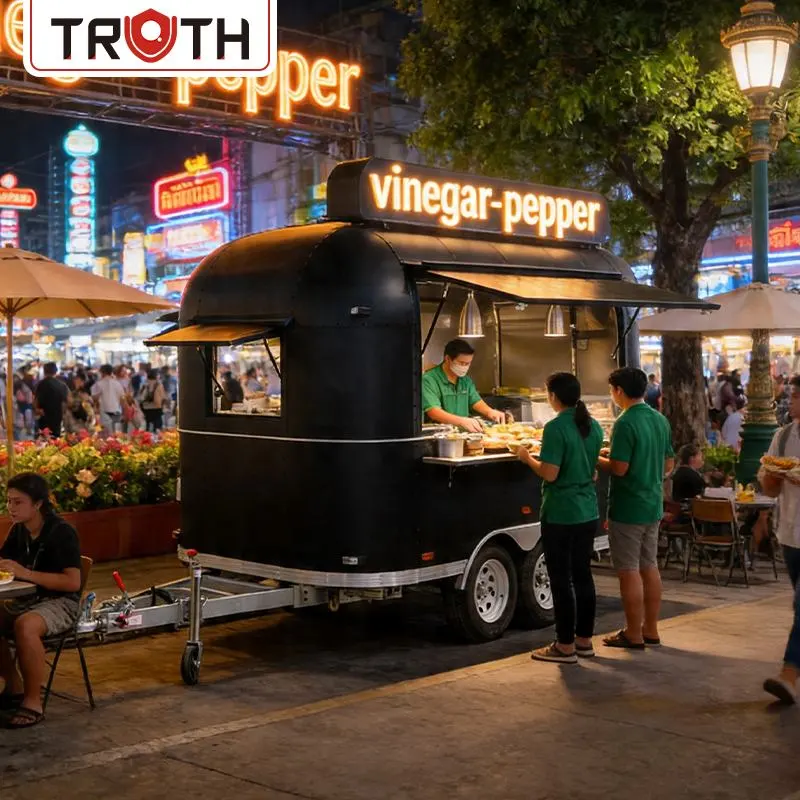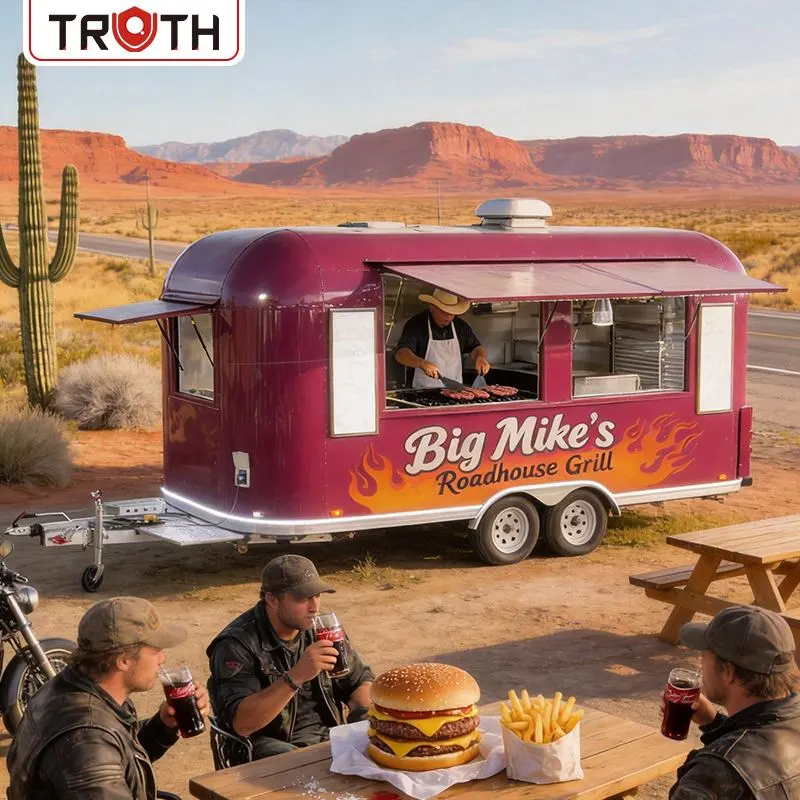
On a warm Saturday evening, a crowd gathers around a gleaming stainless steel trailer parked at a local brewery. The smell of sizzling carne asada and fresh tortillas fills the air, drawing people from across the lot. Inside the compact space, two cooks move with practiced efficiency, taking orders, grilling meat, and assembling tacos with artful speed. The owner, a former restaurant manager who grew tired of the high overhead of brick-and-mortar dining, watches with satisfaction as the line of customers stretches down the block. This is not a fleeting food trend; this is the reality of the modern mobile food industry, and at the center of it is the Taco Food Trailer.
A Taco Food Trailer is a purpose-built mobile kitchen designed specifically for preparing and serving tacos and other Mexican-style street food. It is a self-contained culinary unit that includes cooking equipment (griddles, fryers, burners), food preparation surfaces, refrigeration, storage, and a service window—all housed within a towable trailer chassis. But a Taco Food Trailer is more than just a cooking space on wheels. It represents a smart business investment that offers entrepreneurs a lower barrier to entry than traditional restaurants, the flexibility to reach customers where they are, and the scalability to grow from a single trailer to a fleet of mobile units. This article will explore what a Taco Food Trailer is, its essential features and configurations, the economics of the mobile food business, and the compelling reasons why entrepreneurs and existing restaurant owners are increasingly turning to this agile, profitable business model.

A Taco Food Trailer is a specialized mobile food service unit designed for the preparation, cooking, and serving of tacos and related Mexican cuisine. It is a compact, self-contained kitchen that is mounted on a chassis with wheels, allowing it to be towed by a vehicle to different locations. Unlike a food truck, which is a self-propelled vehicle, a Taco Food Trailer is a towed unit, which offers several advantages: it is generally less expensive to purchase, maintain, and insure; it can be detached from the towing vehicle, allowing the vehicle to be used for other purposes; and it offers more flexibility in terms of layout and customization.
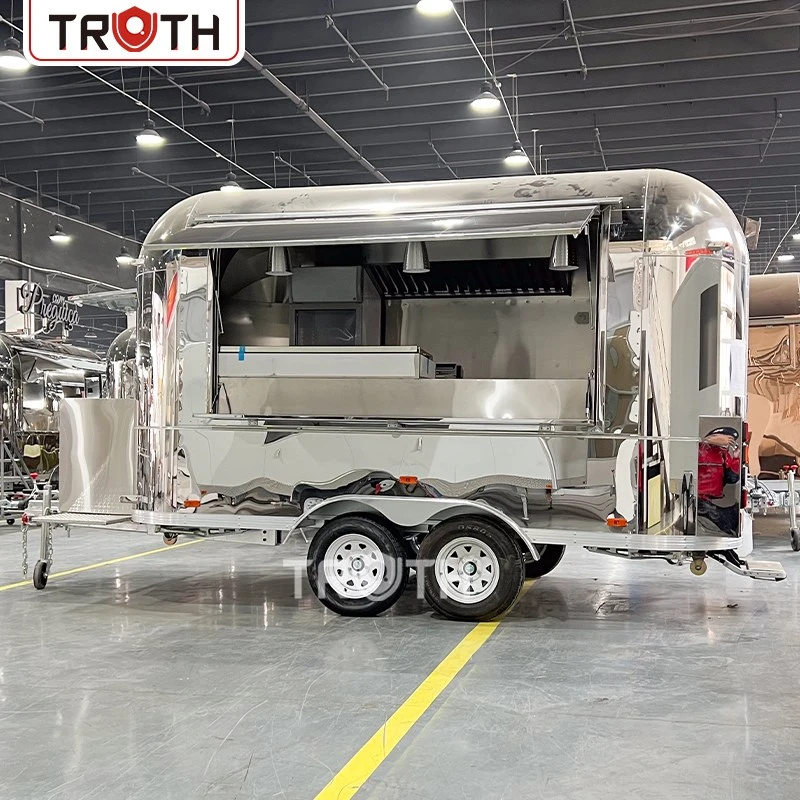
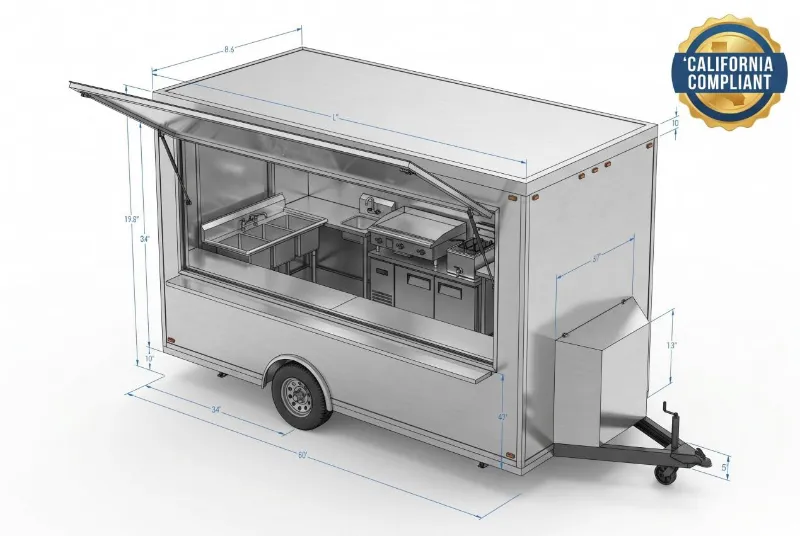
The design of a Taco Food Trailer is meticulously planned to maximize efficiency within a limited space. The typical layout includes a pass-through service window on one side, a cooking area with a griddle (plancha) and a deep fryer, a preparation area with stainless steel countertops, a three-compartment sink for hand washing and dishwashing, a refrigerator and freezer for ingredient storage, and a dry storage area for non-perishables. The interior is constructed with food-grade stainless steel, which is durable, easy to clean, and resistant to corrosion. The trailer is also equipped with a ventilation system, including a hood and exhaust fan, to remove cooking odors and heat from the workspace.
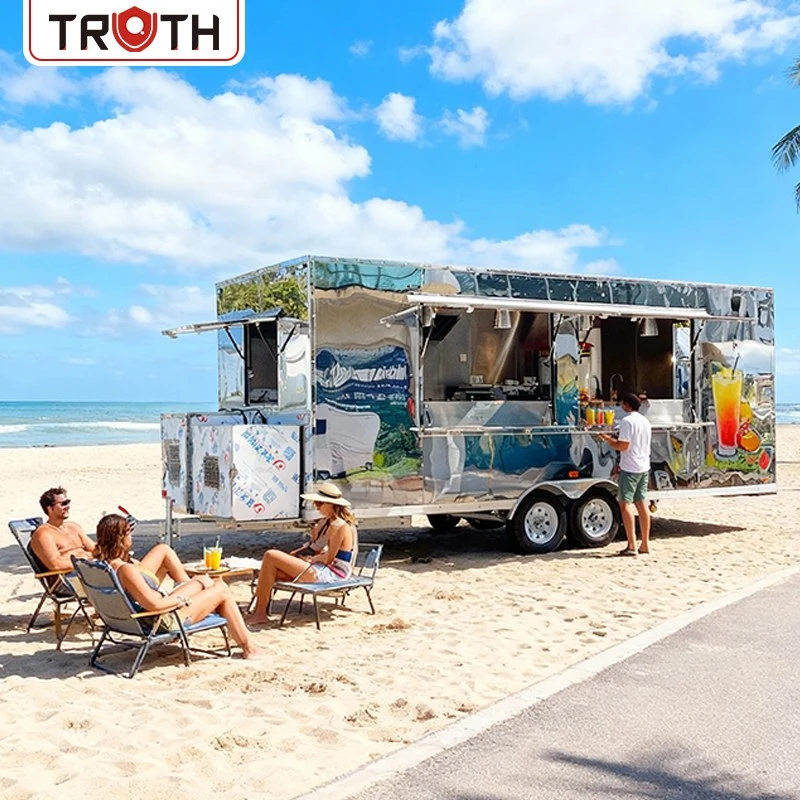
The core appeal of a Taco Food Trailer lies in its accessibility and scalability. For an aspiring entrepreneur, the cost of entry is a fraction of what it would take to open a traditional restaurant. There is no need to sign a long-term lease, invest in expensive interior build-outs, or commit to a fixed location. The Taco Food Trailer can operate at festivals, farmers' markets, breweries, corporate campuses, sporting events, and other venues. This mobility allows the business owner to test different markets, adapt to seasonal demand, and build a loyal customer base. At Qingdao Truth Technology Co., Ltd., we manufacture Taco Food Trailer designed for durability and efficiency, ensuring that our customers have a reliable and functional mobile kitchen from day one.
Investing in a Taco Food Trailer requires careful consideration of the features and equipment needed to operate efficiently and profitably. A well-designed Taco Food Trailer is not just a collection of equipment; it is an integrated production system. The following is a breakdown of the essential features that distinguish a professional-grade Taco Food Trailer from a makeshift conversion.
First and foremost is the cooking equipment. The heart of any taco operation is the griddle (or plancha). A high-performance griddle provides a large, flat cooking surface where meat, vegetables, and tortillas can be cooked simultaneously. The ideal griddle should have precise temperature control, even heat distribution, and a grease management system. A deep fryer is also essential for preparing churros, chips, and other fried items. Another key component is the range or burners for heating sauces and soups. The cooking equipment is typically arranged in a linear fashion for efficient workflow.
Second is the preparation and storage area. Stainless steel countertops provide a hygienic and durable surface for food prep. A three-compartment sink is a regulatory requirement in most jurisdictions, providing separate compartments for washing, rinsing, and sanitizing utensils and equipment. A hands-free hand washing sink is also essential for maintaining proper hygiene. Refrigeration is critical for holding ingredients at safe temperatures. A combination of a reach-in refrigerator and a reach-in freezer is standard. For high-volume operations, a prep table with a refrigerated base can be a valuable addition.
The table below summarizes the key features of a professional Taco Food Trailer and their functions.
| Feature | Description | Purpose |
| Griddle (Plancha) | Large flat steel cooking surface | Grilling meats, heating tortillas, cooking vegetables |
| Deep Fryer | Oil-based cooking vat | Preparing churros, chips, and other fried items |
| Range / Burners | Gas-powered cooking surface with multiple burners | Heating soups, sauces, and beans |
| Stainless Steel Countertops | Hygienic and durable work surfaces | Food preparation and plating |
| Three-Compartment Sink | Three separate basins for washing, rinsing, sanitizing | Commercial dishwashing compliance |
| Refrigerator / Freezer | Units for ingredient storage at safe temperatures | Fresh ingredient preservation |
| Ventilation Hood | Exhaust system for smoke, steam, and heat | Maintaining a comfortable and safe working environment |
| Service Window | Pass-through opening for order taking and service | Efficient customer interaction |
| Awning / Canopy | Retractable cover over the service window | Shelter from weather, branding opportunity |
| Point of Sale System | Electronic payment and order management | Efficient and accurate transactions |
The ventilation system is another critical component. A powerful exhaust hood and fan remove cooking smoke, steam, and heat from the interior of the trailer. This is essential for maintaining a comfortable and safe working environment and is a regulatory requirement. The Taco Food Trailer should also have ample electrical and gas connections, including a generator, LP gas tanks, and a connection for shore power. The service window should be designed for efficient customer service and easy access to the cooking area. Optional features include a canopy or awning for weather protection, a menu board, an audio system for music and announcements, and custom graphics for branding. Our factory at Truth designs each Taco Food Trailer with these essential features, ensuring that our customers are ready to operate from day one.
The decision to invest in a Taco Food Trailer versus a traditional restaurant is often framed as a choice between two business models. However, the data and the lived experiences of countless entrepreneurs make a compelling case for the mobile approach. The primary advantage is the significantly lower capital expenditure. Opening a restaurant requires a substantial upfront investment in real estate, leasehold improvements, building permits, and extensive interior construction. A Taco Food Trailer, by contrast, is a turnkey solution that includes the kitchen, cooking equipment, and service area in a single purchase. The total investment can be as low as 20% to 30% of the cost of opening a comparable brick-and-mortar restaurant.
The lower overhead costs continue beyond the initial purchase. A Taco Food Trailer operation has lower monthly expenses for utilities (electricity, gas, water) and maintenance. There is no expensive commercial lease to sign, no property taxes to pay, and no costly interior build-outs to maintain. The mobile nature of the business allows the owner to choose locations with high foot traffic and lower costs. Many Taco Food Trailer operators collaborate with breweries, wineries, and event organizers, paying a percentage of sales rather than a fixed rent. This cost flexibility can make the business profitable even during slow periods.
Another key advantage is the flexibility to pivot and adapt. A restaurant is tied to a fixed location. If the neighborhood changes, the customer base declines, or a competitor opens nearby, the restaurant owner faces a significant challenge. A Taco Food Trailer can simply move to a new, more profitable location. This mobility also allows the business to test different markets and identify the most promising locations. A Taco Food Trailer can be taken to events, festivals, and farmers' markets, exposing the brand to a wider audience. This adaptability is a significant factor in the success of mobile food businesses, which are often more resilient to economic downturns than their brick-and-mortar counterparts. Our experience at Qingdao Truth Technology Co., Ltd. shows that entrepreneurs who start with a Taco Food Trailer often scale into multiple units or even a full restaurant later, using the trailer as a low-cost proving ground.
The following table compares the key cost factors between a Taco Food Trailer and a brick-and-mortar restaurant.
| Cost Factor | Taco Food Trailer | Brick-and-Mortar Restaurant |
| Initial Capital Investment | $30,000 - $80,000 | $250,000 - $500,000+ |
| Monthly Lease | $0 - $1,000 (event fees) | $5,000 - $20,000+ |
| Utilities (Monthly) | $200 - $500 | $1,500 - $4,000+ |
| Insurance | $100 - $300/month | $500 - $1,500/month |
| Labor Costs | Lower (2-4 staff) | Higher (8-20+ staff) |
| Flexibility | High (can move locations) | Low (fixed location) |
| Event Participation | Easy to attend | Difficult to attend |
| Brand Visibility | High (multiple locations) | Limited to one location |
When purchasing a Taco Food Trailer, understanding the technical specifications is crucial to ensuring that the unit meets your operational needs, complies with regulations, and provides a solid return on investment. The key technical parameters can be grouped into three categories: structural, mechanical, and electrical. The structural specifications define the trailer's size, weight, and material construction. The trailer's overall length and width determine its towing requirements and its ability to maneuver in tight spaces. The weight is a critical factor because it determines the towing capacity needed and affects fuel consumption. The chassis must be designed for durability, with a robust axle and suspension system that can handle the weight of the equipment and the ingredients.
The material construction is a key quality indicator. The interior and exterior surfaces should be made from food-grade stainless steel. Stainless steel is non-porous, corrosion-resistant, and easy to clean, making it the ideal material for food preparation areas. The thickness of the stainless steel, often measured in gauge, affects the durability and longevity of the trailer. A thicker gauge (lower number) is more durable and resistant to dents and warping. The floor of the Taco Food Trailer should be slip-resistant and easy to clean, often featuring a diamond-plate aluminum or stainless steel surface.
The mechanical specifications cover the cooking equipment and the utilities. The griddle should be gas-fired and have a high BTU rating for fast heating and consistent temperature. The deep fryer should also be gas-fired and have a suitable capacity for the expected volume. The ventilation hood should be designed to remove smoke and grease effectively, and the exhaust fan should have sufficient CFM (cubic feet per minute) to meet the requirements of the cooking equipment. The trailer should have adequate electrical service, typically a 50-amp or 100-amp inlet, and be equipped with a breaker panel and GFCI outlets. The Taco Food Trailer should also have a water system consisting of a freshwater tank, a water heater, and a wastewater tank.
The table below provides a summary of the key technical specifications for a typical Taco Food Trailer.
| Parameter | Specification | Notes |
| Trailer Length | 18 ft - 24 ft (customizable) | Longer trailers offer more workspace |
| Trailer Width | 8.5 ft (standard width) | Width limited by road regulations |
| Interior Headroom | 6.5 ft - 7 ft | Important for comfortable working |
| GVWR | 7,000 - 12,000 lbs | Gross Vehicle Weight Rating |
| Stainless Steel Gauge | 18 Gauge - 14 Gauge (interior) | Thicker gauge = more durable |
| Griddle BTU | 40,000 - 80,000 BTU | Higher BTU for faster cooking |
| Ventilation CFM | 1,200 - 2,000 CFM | Depends on cooking equipment |
| Fresh Water Tank | 40 - 80 gallons | Supports extended operations |
| Wastewater Tank | 40 - 60 gallons | Must be larger than fresh water tank |
| Electrical Service | 50A or 100A | Depends on equipment load |
| Propane Tank Capacity | 2x 30 lbs or 2x 40 lbs | Supports extended cooking periods |
The profitability of a Taco Food Trailer business is driven by high margins, low overhead, and the ability to capture high-traffic moments. The key to profitability lies in understanding the economics of the mobile food industry. The primary revenue stream is direct sales to customers. The average price of a taco in a food trailer is between $3 and $5, while the cost of goods sold (COGS) is typically 25-35% of the sale price. This means that a Taco Food Trailer can generate a gross profit of over 65% per item. For example, a $4 taco with a COGS of $1.20 yields a gross profit of $2.80. Selling 100 tacos per hour at a busy event can generate $400 in gross profit per hour of operation.
Events and festivals provide a significant boost to sales. At a large event, a Taco Food Trailer can serve 200-400 customers per hour. The high volume compensates for the lower per-customer spending. A full-day event can generate $5,000 to $15,000 in sales. These events have a higher barrier to entry (permits, fees), but the revenue potential is substantial. Catering events, such as weddings, corporate parties, and private events, offer another revenue stream. Catering often involves a fixed fee plus a per-person charge, resulting in higher average ticket sizes. A single wedding catering order can generate $1,000 to $3,000 in revenue.
Profitability also depends on managing operating costs effectively. The low overhead of a Taco Food Trailer ensures that a higher percentage of revenue translates into profit. The cost of labor, food, and supplies is directly proportional to sales. The key to maximizing profit is to increase the volume of sales while managing expenses. This can be achieved by selecting high-traffic locations, offering a menu with high-margin items, managing inventory to minimize waste, and cross-training staff to be efficient in all roles. Our factory at Qingdao Truth Technology Co., Ltd. supports our customers by providing a turnkey Taco Food Trailer that is designed for operational efficiency, helping them maximize their profitability from day one.
The table below provides a typical revenue and cost breakdown for a Taco Food Trailer business operating at a moderate level.
| Item | Amount per Month | Notes |
| Gross Revenue | $15,000 - $25,000 | Depends on location and events |
| Cost of Goods Sold (COGS) | $3,750 - $6,250 | 25% of gross revenue |
| Labor Costs | $3,000 - $5,000 | Includes owner's salary |
| Supplies & Marketing | $1,000 - $2,000 | Packaging, disposables, advertising |
| Insurance & Permits | $500 - $1,000 | Mandatory costs |
| Fuel & Maintenance | $500 - $1,000 | Trailer towing and upkeep |
| Total Expenses | $8,750 - $15,250 | |
| Net Profit | $6,250 - $9,750 | Profit margin of 40-50% |
Choosing the right Taco Food Trailer is a decision that will impact your business for years. The key is to select a trailer that is the right size, is equipped with the right features, and is built with the right quality. The choice should be guided by your specific business model, menu, and operational goals. The first step is to assess your menu and cooking methods. If you plan to focus on grilled tacos, a large griddle is the most important piece of equipment. If you plan to offer a wide variety of items, including burritos and quesadillas, you may need additional prep space and a larger refrigerator. The menu will determine the size and layout of the Taco Food Trailer.
The next step is to estimate your typical volume of customers. If you expect to serve 50-100 customers per hour, a 10-14 foot trailer may be sufficient. If you plan to serve 200-300 customers per hour, a 18-24 foot trailer with a larger kitchen and more staff will be necessary. The interior layout should be designed to maximize efficiency and minimize waste motion. The workflow should flow from the front serving window, where orders are taken, to the back of the trailer where the cooking and prep stations are located. The trailer should also be designed to meet all local health codes and fire safety regulations.
The quality of the trailer construction is also a critical factor. The chassis should be built with heavy-duty steel and should have a durable finish that resists rust and corrosion. The insulation should be sufficient to keep the interior cool in summer and warm in winter. The electrical system should be designed for safety and reliability. The plumbing should be designed to prevent leaks and clogs. At Qingdao Truth Technology Co., Ltd., we provide a range of Taco Food Trailer models, from compact units to full-size commercial kitchens. We work closely with our customers to customize the design to fit their specific needs. Our trailers are built with high-quality materials and are designed to meet the most stringent safety standards. The table below provides a comparison of the different Taco Food Trailer sizes and their typical applications.
| Trailer Size | Length | Typical Capacity | Best Suited For |
| Compact | 10-14 ft | 1-2 people | Single operator, simple menu, small events |
| Standard | 16-20 ft | 2-4 people | Most common choice, balanced capacity and cost |
| Large | 22-28 ft | 4-6 people | High-volume events, multiple cooking stations |
| Custom | Custom | Variable | Specialized menu, unique layout requirements |
Beyond size, consider the trailer's construction quality, the reputation of the manufacturer, and the level of after-sales support offered. Our factory at Truth has been building Taco Food Trailer for over a decade, and we have a proven track record of quality and customer satisfaction.
Question 1: Do I need a special driver's license to tow a Taco Food Trailer?
Answer: In most jurisdictions, a standard driver's license is sufficient to tow a Taco Food Trailer, provided that the combined weight of the towing vehicle and the trailer does not exceed the limit for a standard license (typically 26,000 lbs). However, you should check the regulations in your specific state or country, as they can vary. If the trailer is over a certain length (often 28 feet) or weight, a commercial driver's license (CDL) may be required. We recommend consulting your local DMV for specific requirements.
Question 2: How much does a Taco Food Trailer typically cost?
Answer: The cost of a Taco Food Trailer varies widely depending on the size, features, and quality of construction. A basic, entry-level trailer can cost between $15,000 and $25,000. A mid-range trailer with a full kitchen and commercial-grade equipment typically costs $30,000 to $60,000. A high-end, custom-built trailer with premium features can cost $80,000 or more. At Qingdao Truth Technology Co., Ltd., we offer a range of models to fit different budgets, and we can provide a detailed quote based on your specific requirements.
Question 3: What are the ongoing maintenance requirements for a Taco Food Trailer?
Answer: Maintaining a Taco Food Trailer involves both the trailer itself and the equipment inside. Regular maintenance tasks include: inspecting and repacking wheel bearings, checking and maintaining tires, checking and maintaining the braking system, inspecting the electrical system for wear, cleaning the ventilation hood and exhaust fan, descaling the water heater, checking the propane system for leaks, and ensuring all cooking equipment is functioning properly. A preventive maintenance schedule can help extend the life of the trailer and prevent costly breakdowns.
Question 4: Can I finance a Taco Food Trailer?
Answer: Yes, many financial institutions and equipment financing companies offer loans for Taco Food Trailer. The terms and conditions vary, but typically you can finance up to 80-100% of the purchase price. The interest rate and repayment period will depend on your credit history, the age and value of the trailer, and the lender's policies. We can provide you with a list of financing partners who have experience in the food service industry.
Question 5: How long does it take to get a Taco Food Trailer after ordering?
Answer: The lead time for a Taco Food Trailer varies depending on the manufacturer's production schedule and the complexity of the customization. Standard models are typically available within 4-8 weeks. Custom-built trailers can take 8-12 weeks or longer to complete. At Qingdao Truth Technology Co., Ltd., we provide our customers with a realistic timeline for delivery and keep them informed of the progress throughout the manufacturing process.
A Taco Food Trailer is more than a mobile kitchen; it is a gateway to entrepreneurship, a flexible business model, and a proven path to profitability. The lower capital investment, reduced overhead, and ability to reach customers in high-traffic locations make it a compelling alternative to traditional brick-and-mortar restaurants. The Taco Food Trailer offers the freedom to test concepts, build a brand, and scale a business. Whether you are a first-time entrepreneur or an experienced restaurant owner looking to expand, a Taco Food Trailer can be a smart and strategic investment.
Choosing the right Taco Food Trailer requires careful planning and consideration of your menu, target market, and operational needs. The selection of the right size, equipment, and features is critical to success. At Qingdao Truth Technology Co., Ltd., we specialize in designing and manufacturing Taco Food Trailer that meet the highest standards of quality, durability, and safety. Our team works closely with each customer to ensure that their trailer is perfectly matched to their business vision.
Ready to turn your dream of owning a Taco Food Trailer into reality? Contact Qingdao Truth Technology Co., Ltd. today for a free consultation and quote.