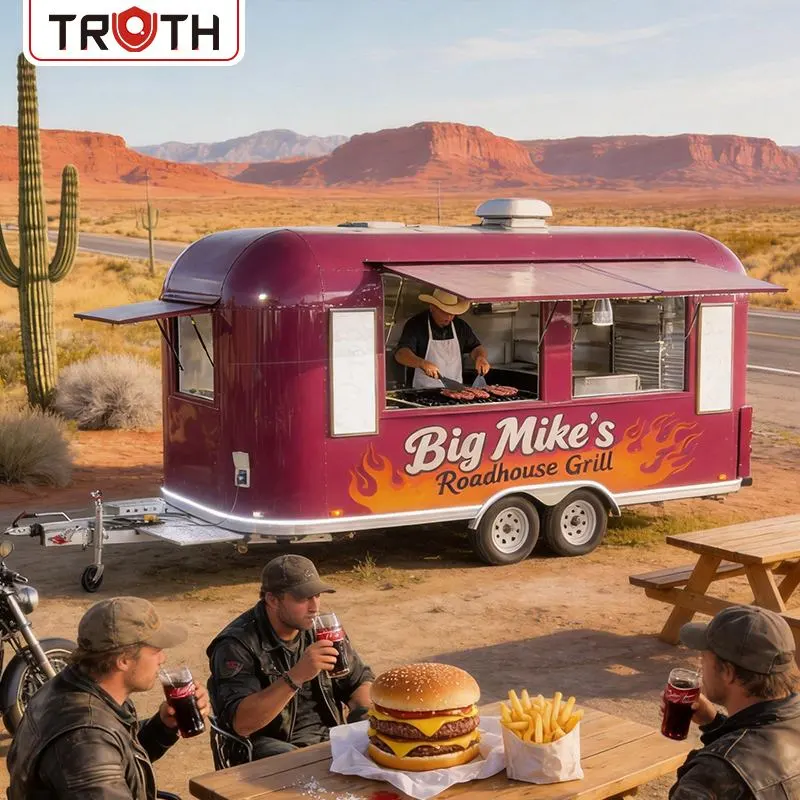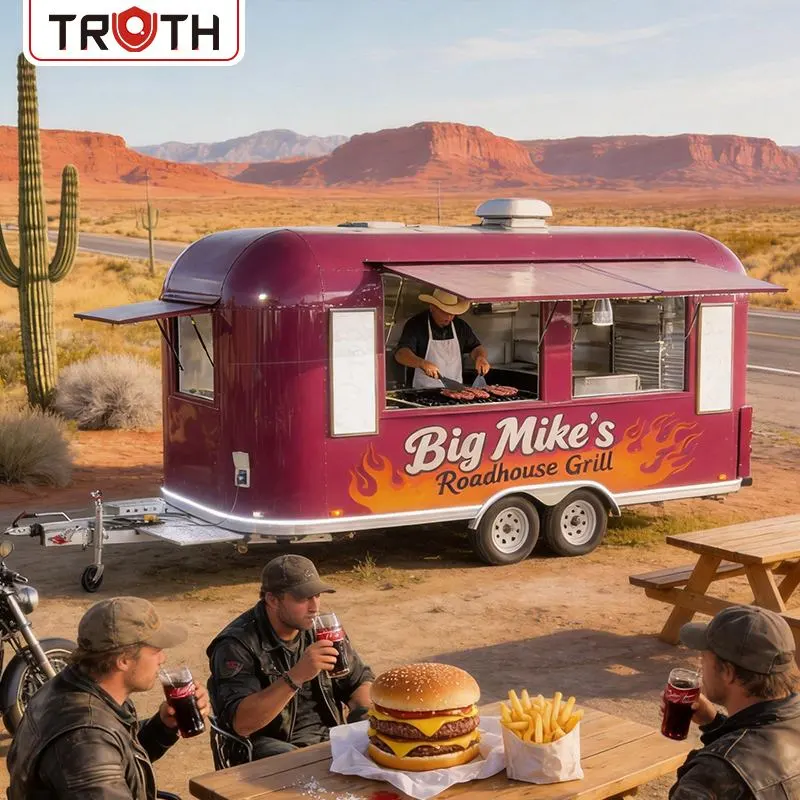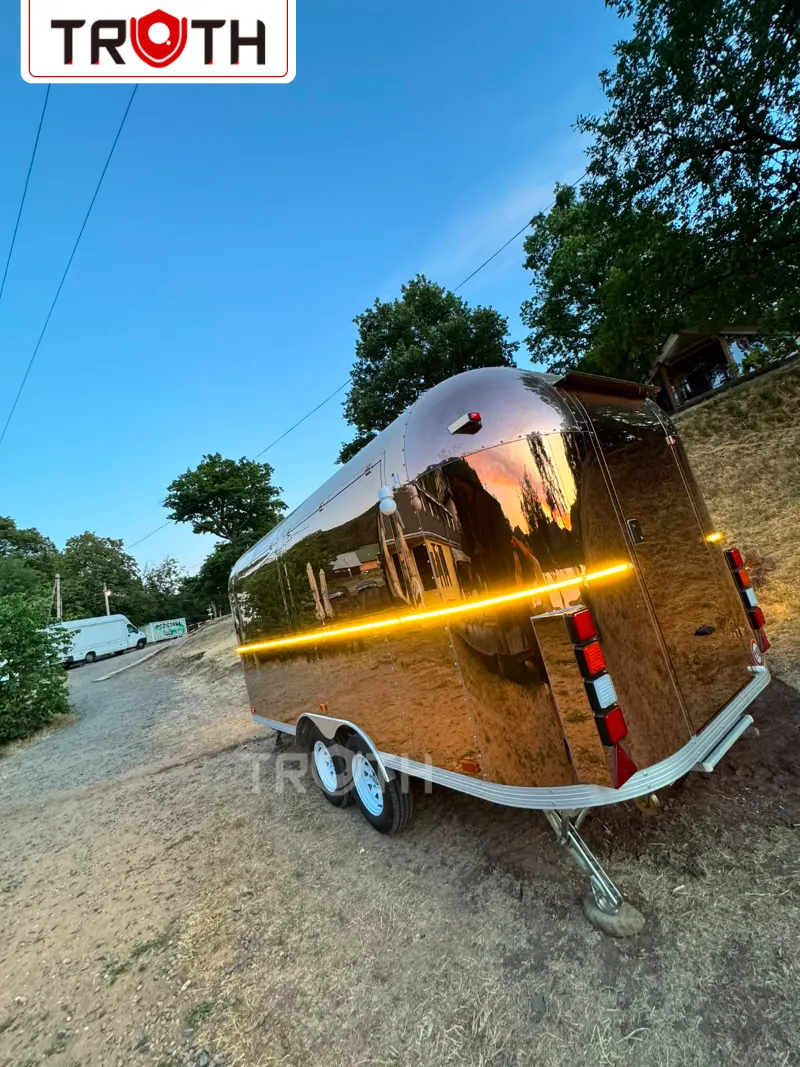
A food truck is a commercial kitchen that happens to be mounted on a chassis. It is subjected to grease, smoke, spills, crumbs, condiments, and daily wipe-downs, often in a confined space with limited water and waste capacity. The cleaning and maintenance burden is therefore higher than in a fixed kitchen, not lower. A Stainless Steel Food Truck addresses this burden through the material itself, the surface finish, the joint design, and the equipment layout. Stainless steel resists corrosion and does not harbor bacteria in the way that scratched plastic or chipped paint can, but the benefit depends on the grade, the finish, and the fabrication quality. A truck built with rough welds, crevices, and unsealed penetrations will be harder to clean than a truck built with smooth radii, continuous welds, and sealed edges.
This guide is written for buyers who are sourcing a Stainless Steel Food Truck and need to understand how the vehicle will behave in daily service. It explains the design features that make cleaning faster, the cleaning and maintenance schedule that keeps the kitchen compliant, the surface and welding parameters that determine whether the stainless steel stays cleanable, the cleaning chemicals that are safe for the material, and the verification steps that a procurement team should complete before placing an order. The content is organized around the practical questions a buyer faces, and it includes the product parameters and documentation that a reliable supplier should provide. Our factory at Qingdao Truth Technology Co., Ltd. builds Stainless Steel Food Trucks for mobile food operators, and our experience with cleaning and maintenance requirements informs the guidance below.

Cleaning and maintenance are design issues in a food truck because the cleaning task is constrained by the vehicle. The water supply is limited, the waste tank is limited, the floor space is limited, and the ventilation is limited. A design that creates hidden ledges, deep crevices, or difficult-to-reach corners will consume more water, more time, and more labor than a design that is smooth and accessible. The table below maps the design conditions to the cleaning burden they create.
| Design Condition | Cleaning Burden | Maintenance Risk | Procurement Implication |
| Sharp internal corners | Grease and crumbs trap in the corner | Bacterial growth, odor | Specify radiused corners and coved joints |
| Rough weld beads | Residue clings to the bead | Corrosion initiation, difficult sanitation | Specify ground and polished welds |
| Unsealed wall penetrations | Water and grease enter the cavity | Mold, structural corrosion | Specify sealed grommets and gaskets |
| Flat equipment bases | Debris accumulates under the unit | Pest attraction, difficult inspection | Specify raised or sealed bases |
| Poor ventilation | Grease deposits on surfaces | Fire risk, sticky surfaces | Specify hood and fan capacity for the menu |
The cleaning burden is not only about time. It is about water and waste capacity. A truck that uses more water for cleaning will need a larger fresh water tank or more frequent refills, and a truck that sends more grease to the waste tank will need more frequent disposal. These constraints affect the operating cost of the truck, not just the appearance. A design that reduces the cleaning burden is therefore a design that increases the operating range and reduces the downtime between service stops.
A practical example illustrates the point. A truck with coved floor-to-wall joints and a sealed equipment base can be cleaned with a squeegee and a hand sprayer in about twenty minutes. A truck with square corners and open equipment bases may require a brush, a scraper, and twice the water to achieve the same result. The difference is not the operator's effort. It is the design. For a procurement team, the design review should include a cleaning walk-through: follow the grease path from the grill to the floor, from the prep table to the waste tank, and identify every point where residue can accumulate. The design should eliminate those points before the truck is built.
Our factory at Qingdao Truth Technology Co., Ltd. reviews the cleaning path with our customers during the design stage of each Stainless Steel Food Truck. We mark the coved joints, the sealed penetrations, and the equipment bases on the layout drawing, and we confirm that the cleaning access is adequate for the menu and the service model. The goal is to make cleaning a design outcome, not an afterthought.
The stainless steel grade, the surface finish, the fabrication method, and the equipment layout determine how easy the truck is to clean. The grade selection starts with 304 stainless steel for general kitchen surfaces and 316 stainless steel for areas exposed to salt, chloride, or aggressive cleaning chemicals. The surface finish is measured by the roughness average, and a smoother finish is easier to clean because it offers fewer places for residue to cling. The fabrication method determines whether the joints are crevices or continuous surfaces. The table below summarizes the choices and their cleaning implications.
| Choice | Typical Specification | Cleaning Implication | Procurement Note |
| Stainless steel grade | 304 for general surfaces, 316 for aggressive exposure | 316 resists chloride pitting and cleaning chemical attack | Confirm the grade for the menu and cleaning regime |
| Surface finish | Ra 0.8 µm or smoother for food contact | Smooth surface releases residue and supports sanitation | Request the measured Ra value |
| Weld treatment | Ground, polished, and passivated | Removes crevices and restores corrosion resistance | Request weld inspection records |
| Corner detail | Radiused or coved, not square | Eliminates the corner trap | Review the layout drawing |
| Equipment base | Sealed to the floor or raised on legs | Prevents debris accumulation underneath | Confirm the base detail in the drawing |
The surface finish is often the most misunderstood parameter. A brushed finish with a visible grain is common in commercial kitchens because it hides scratches, but the grain can trap residue if the finish is too rough. A smoother finish is easier to clean, but it can show scratches more readily. The correct choice depends on the application. For a food truck, where cleaning water is limited and the surfaces are visible to customers, a smooth finish in the food contact areas and a brushed finish in the less critical areas is often the best compromise. The buyer should request the measured roughness for the food contact surfaces, not just the finish name.
The fabrication method is equally important. A weld that is left as a rough bead creates a crevice between the bead and the parent metal, and the crevice is difficult to clean. A weld that is ground and polished removes the crevice, but the grinding can remove the passive layer and reduce corrosion resistance. The correct process is to grind, polish, and then passivate the weld so that the corrosion resistance is restored. Our factory at Truth follows this sequence for the Stainless Steel Food Truck surfaces that are accessible to food and cleaning water, and we provide the weld inspection records with the truck. The goal is to deliver a surface that is both smooth and corrosion-resistant.
For a buyer, the specification should state the grade, the finish, the weld treatment, and the corner detail. A supplier that provides a generic "food grade stainless steel" statement is not providing enough information to evaluate the cleaning performance. A supplier that provides the grade, the measured roughness, and the weld treatment is providing the data needed to compare options.
A realistic cleaning schedule for a Stainless Steel Food Truck is built around the service cycle, the menu, and the available water and waste capacity. The schedule should be specific enough to be followed and flexible enough to accommodate a busy service. The timeline below presents a typical daily and weekly schedule for a truck serving grilled and fried menu items.
The schedule must be matched to the cleaning chemicals. Stainless steel is resistant to many chemicals, but it is not immune to all of them. Chloride-based cleaners can cause pitting if they are left on the surface, and abrasive cleaners can scratch the finish. The table below lists the common cleaning agents and their compatibility with stainless steel.
| Cleaning Agent | Compatibility | Typical Use | Precaution |
| Mild dish soap | Compatible | Daily wipe-down | Rinse and dry after use |
| Alkaline degreaser | Compatible | Grill and hood cleaning | Follow dilution and contact time |
| Food-safe sanitizer | Compatible | Prep surfaces and cutting boards | Use the specified concentration |
| Chloride-based cleaner | Limited | Heavy soil on non-food surfaces | Rinse immediately, avoid prolonged contact |
| Abrasive powder | Not recommended | Not for stainless steel | Scratches the finish and traps residue |
The cleaning schedule should also include the waste and water systems. The fresh water tank, the waste tank, and the drain lines are part of the kitchen, and they require periodic cleaning and inspection. A truck that cleans the visible surfaces but neglects the tanks will develop odor and hygiene problems. Our factory at Qingdao Truth Technology Co., Ltd. provides a cleaning and maintenance guide with each Stainless Steel Food Truck, covering the surfaces, the equipment, the tanks, and the drains. The goal is to give the operator a schedule that is realistic for the service model and the truck's capacity.
For a buyer, the cleaning schedule is a procurement criterion because it affects the operator's cost and the truck's usable life. A truck that requires an hour of cleaning after each service is a truck that reduces the operator's available selling time. A truck that can be cleaned in thirty minutes is a truck that supports a higher service frequency. The design choices described in the previous sections are what make the shorter schedule possible.
Buyers should verify surface finish and weld quality through a combination of document review, visual inspection, and measurement. The document review confirms that the specified grade and finish were used. The visual inspection identifies rough welds, crevices, and unsealed penetrations. The measurement confirms the roughness and the passivation. The checklist below provides a practical verification sequence for a Stainless Steel Food Truck inspection.
The surface roughness measurement is the most objective check. A roughness average of Ra 0.8 µm or smoother is generally considered cleanable for food contact surfaces. A rougher surface may still be acceptable in non-contact areas, but it should not be used where food or cleaning water contacts the surface. The measurement should be taken at several points on each surface, because the finish can vary across a welded or ground area. Our factory at Qingdao Truth Technology Co., Ltd. measures the roughness of the food contact surfaces on each Stainless Steel Food Truck and records the values in the inspection report. The goal is to provide the buyer with evidence that the surface meets the specification.
The weld quality check is equally important. A weld that is not passivated will corrode at the weld toe, and the corrosion will create a crevice that is difficult to clean. The passivation test is a simple way to confirm that the weld has been treated. A passivation kit applies a test solution to the weld and observes the color change. A blue stain indicates free iron, which means the passivation is incomplete. The buyer should request the passivation record for the welds and should spot-check a sample during the factory inspection.
For a buyer, the verification should be completed before the truck is shipped. A truck that arrives with rough welds or unsealed penetrations is difficult to correct after the fact. The inspection can be performed at the supplier's factory or at the buyer's site, but it should be performed before the truck is placed in service. The documentation and the measurements should be retained as part of the truck's maintenance record.
Procurement should evaluate a supplier's maintenance support by looking for the documentation, the spare parts, and the technical assistance that keep the Stainless Steel Food Truck in service. A supplier that provides only the truck is not providing maintenance support. A supplier that provides a cleaning guide, a maintenance schedule, a spare parts list, and a technical contact is providing the support that reduces downtime. The table below provides a supplier evaluation framework for maintenance support.
| Support Element | What to Request | Why It Matters |
| Cleaning and maintenance guide | Surface, equipment, tank, and drain procedures | Gives the operator a practical schedule |
| Spare parts list | Seals, gaskets, filters, and fittings | Reduces downtime when a part fails |
| Warranty terms | Coverage for fabrication and equipment | Protects the buyer's investment |
| Technical contact | Phone or email support for maintenance questions | Resolves issues quickly |
| Factory inspection record | Roughness, weld, and passivation data | Confirms the as-built condition |
The supplier's maintenance support should also include guidance on the water and waste systems. A food truck's fresh water tank, waste tank, and drain lines require periodic cleaning and inspection, and the supplier should provide the procedures and the recommended chemicals. A supplier that understands the food truck's operating constraints is a supplier that can help the operator avoid the common problems: clogged drains, odor from the waste tank, and scale in the water heater.
Our factory at Qingdao Truth Technology Co., Ltd. provides a cleaning and maintenance guide, a spare parts list, and a technical contact with each Stainless Steel Food Truck. We also provide the factory inspection record with the roughness and passivation data. The goal is to give the buyer the support needed to keep the truck in service, not just the truck itself.
For a buyer, the supplier evaluation should include a review of the maintenance support package before the order is placed. A supplier that can provide the guide, the parts list, and the technical contact is a supplier that is prepared to support the product. A supplier that cannot provide this package is a supplier that may leave the operator to solve maintenance problems alone.
Question 1: How often should a stainless steel food truck be cleaned?
Answer: The food contact surfaces should be cleaned and sanitized before and after each service, and the grill and hood should be degreased daily. The floor should be swept or squeegeed during service and washed after service. A weekly deep clean should cover the hood, the fan, the seals, and the area behind the equipment. A monthly inspection should cover the water system, the waste system, and the stainless steel surfaces for corrosion or damage.
Question 2: Which cleaning chemicals are safe for stainless steel in a food truck?
Answer: Mild dish soap, alkaline degreasers, and food-safe sanitizers are generally compatible with stainless steel. Chloride-based cleaners should be used with caution and rinsed immediately, because prolonged contact can cause pitting. Abrasive powders and steel wool should be avoided because they scratch the finish and create places for residue to cling. Always follow the chemical manufacturer's dilution and contact time instructions.
Question 3: How does weld quality affect cleaning in a food truck?
Answer: A rough weld bead creates a crevice between the bead and the parent metal, and the crevice traps grease and residue that are difficult to remove. A weld that is ground, polished, and passivated removes the crevice and restores the corrosion resistance. The passivation step is important because grinding can remove the passive layer, and a non-passivated weld will corrode at the weld toe.
Question 4: What surface roughness is suitable for food contact surfaces in a food truck?
Answer: A roughness average of Ra 0.8 micrometers or smoother is generally considered cleanable for food contact surfaces. A smoother surface releases residue more easily and supports sanitation. The roughness should be measured at several points on each surface, because the finish can vary across welded or ground areas. The measured value should be recorded in the inspection report.
Question 5: What maintenance support should I expect from a food truck supplier?
Answer: The supplier should provide a cleaning and maintenance guide, a spare parts list, warranty terms, and a technical contact for maintenance questions. The supplier should also provide the factory inspection record with the surface roughness and passivation data. A supplier that provides these items is prepared to support the truck through its service life, not just at the point of sale.
Cleaning and daily kitchen maintenance in a Stainless Steel Food Truck are determined by design as much as by operator effort. The stainless steel grade, the surface finish, the weld treatment, the corner detail, and the equipment base all affect how quickly and thoroughly the truck can be cleaned. The cleaning schedule must be matched to the service cycle and the water and waste capacity, and the cleaning chemicals must be compatible with the stainless steel. For procurement teams, the verification should cover the material certificates, the roughness measurement, the weld passivation, and the supplier's maintenance support package. Our factory at Qingdao Truth Technology Co., Ltd. builds Stainless Steel Food Trucks with hygienic design details and provides the cleaning guide, the inspection record, and the spare parts list that buyers need to evaluate the product. If you are sourcing a stainless steel food truck and need to confirm the cleaning and maintenance performance, contact our team to discuss the design details and the documentation for your application.