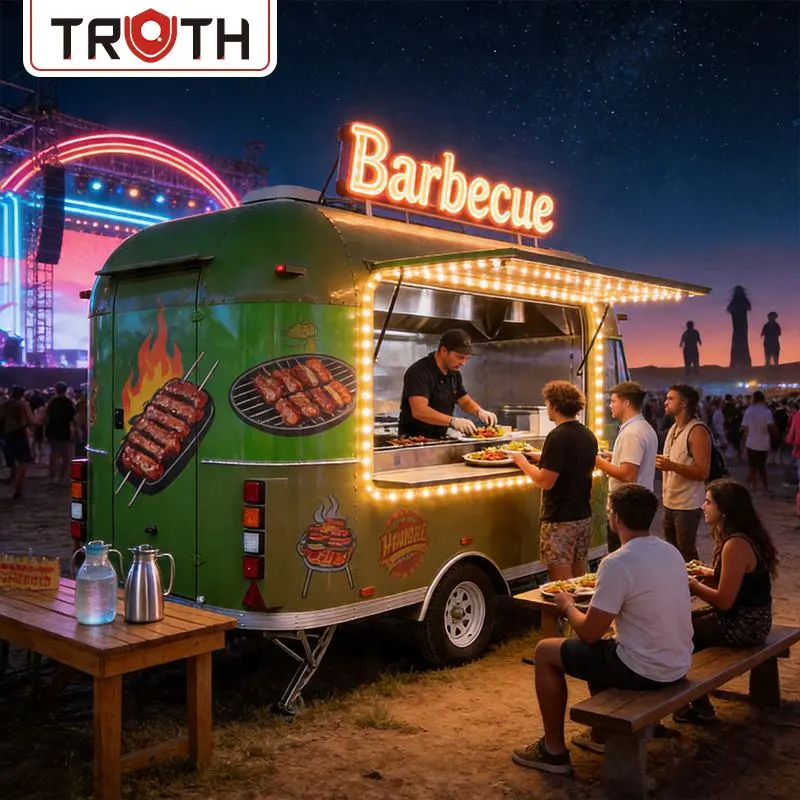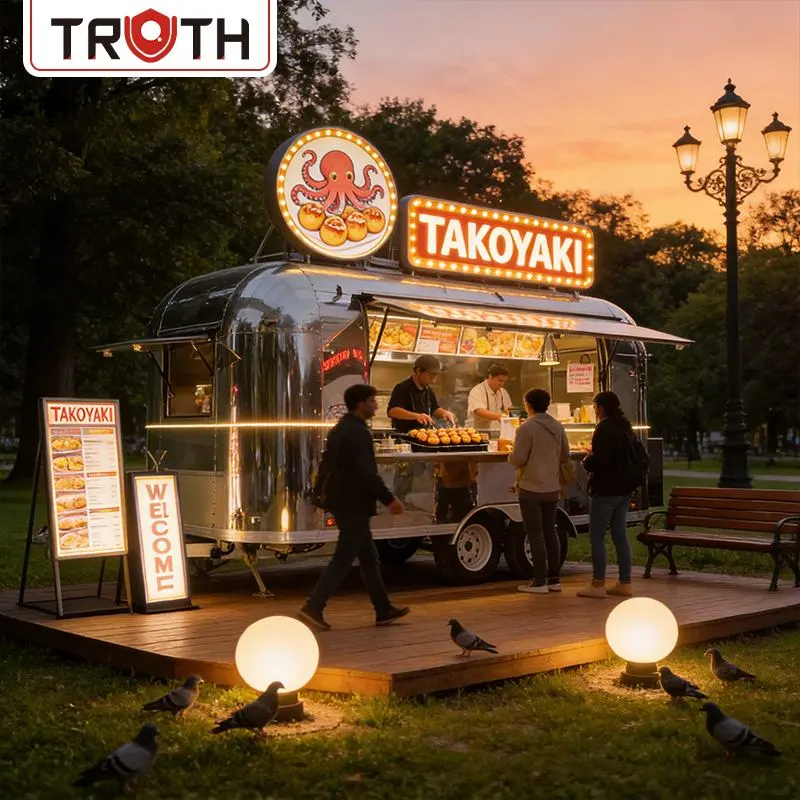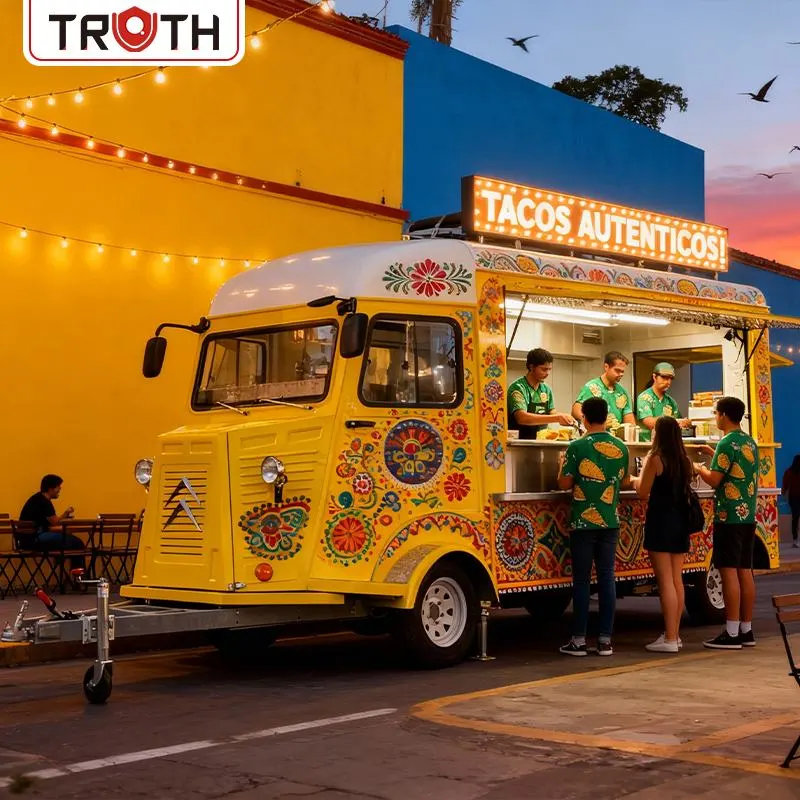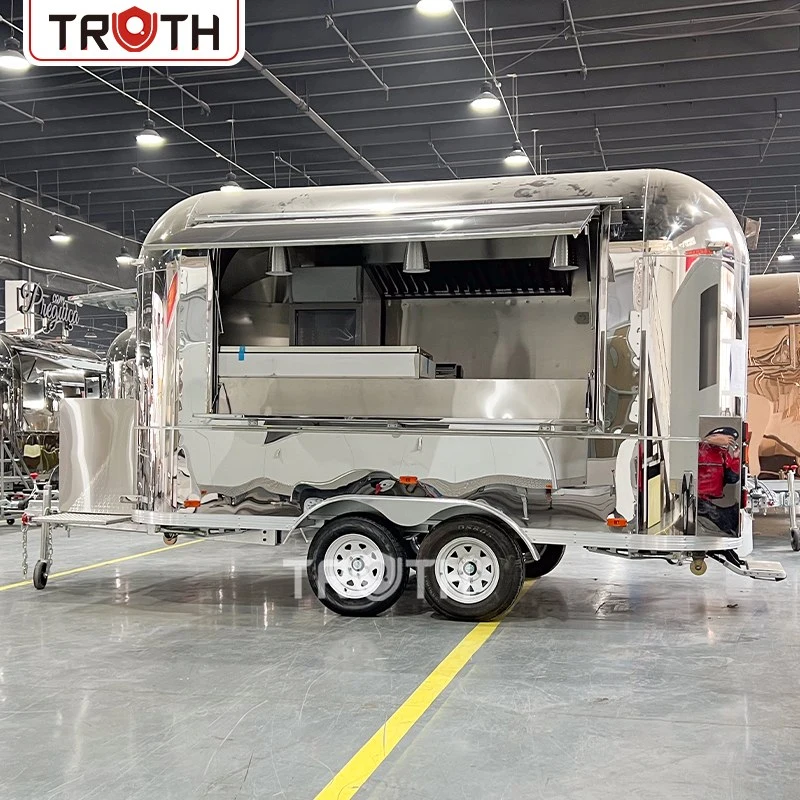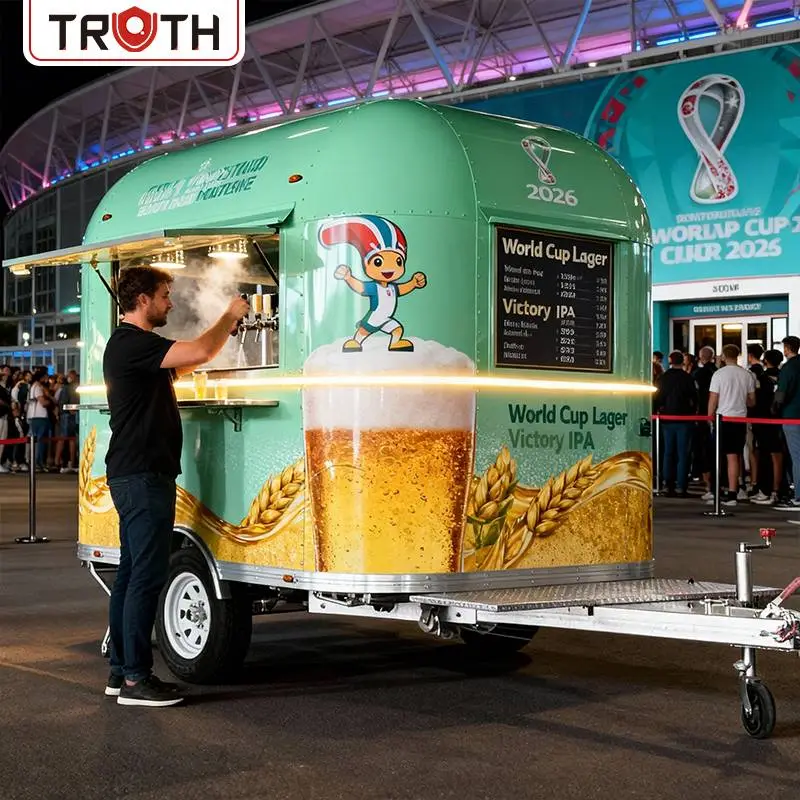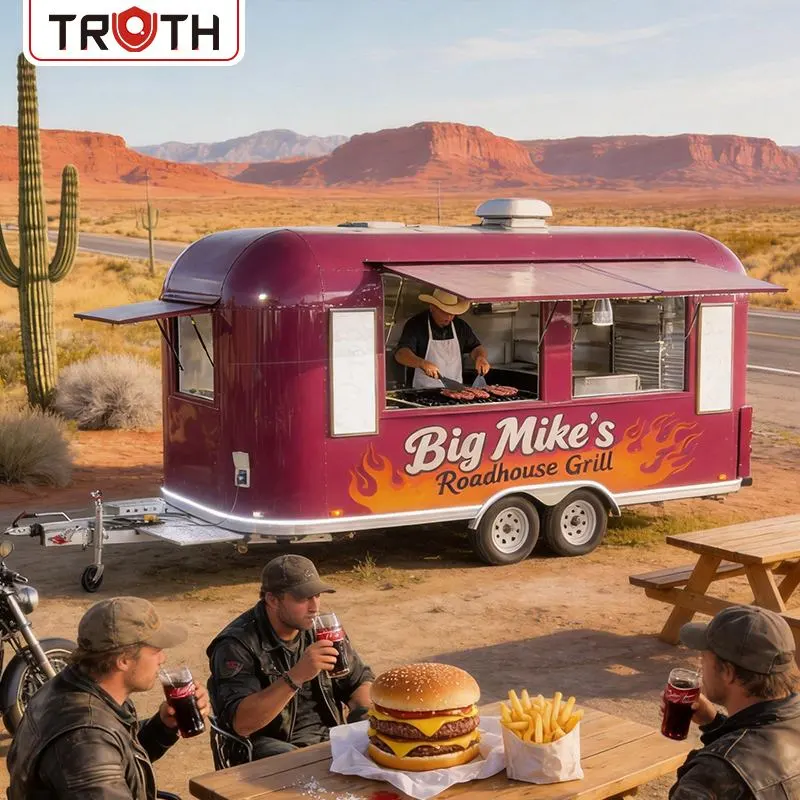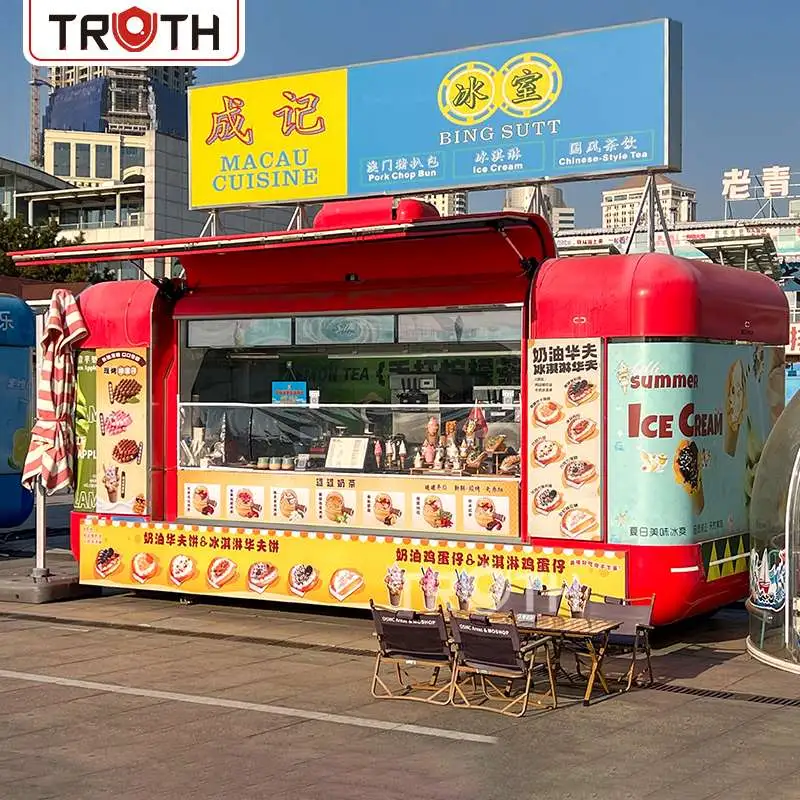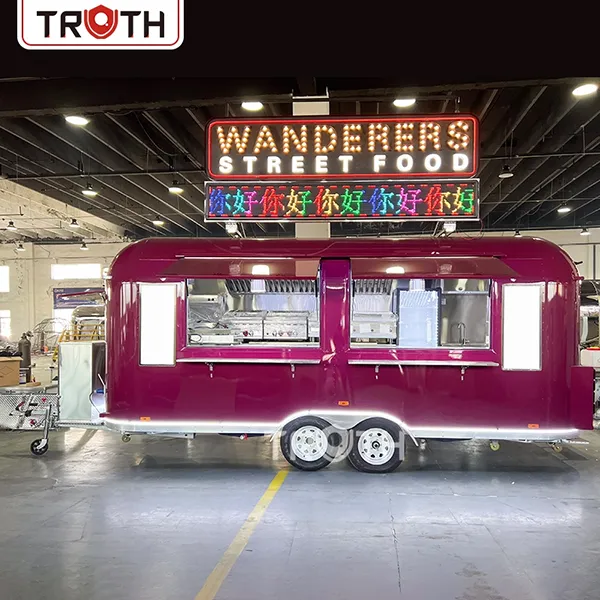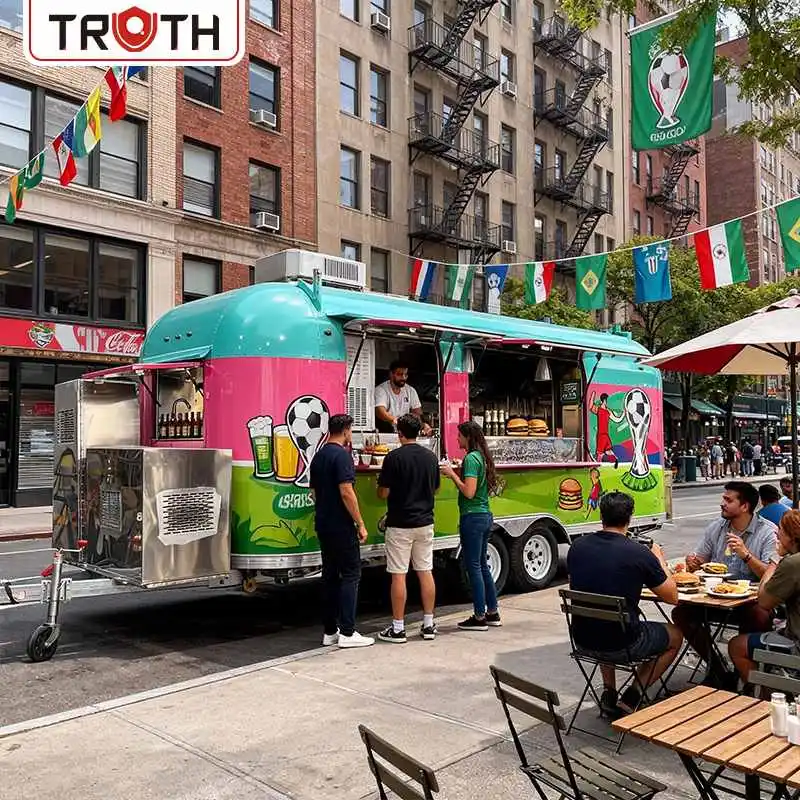
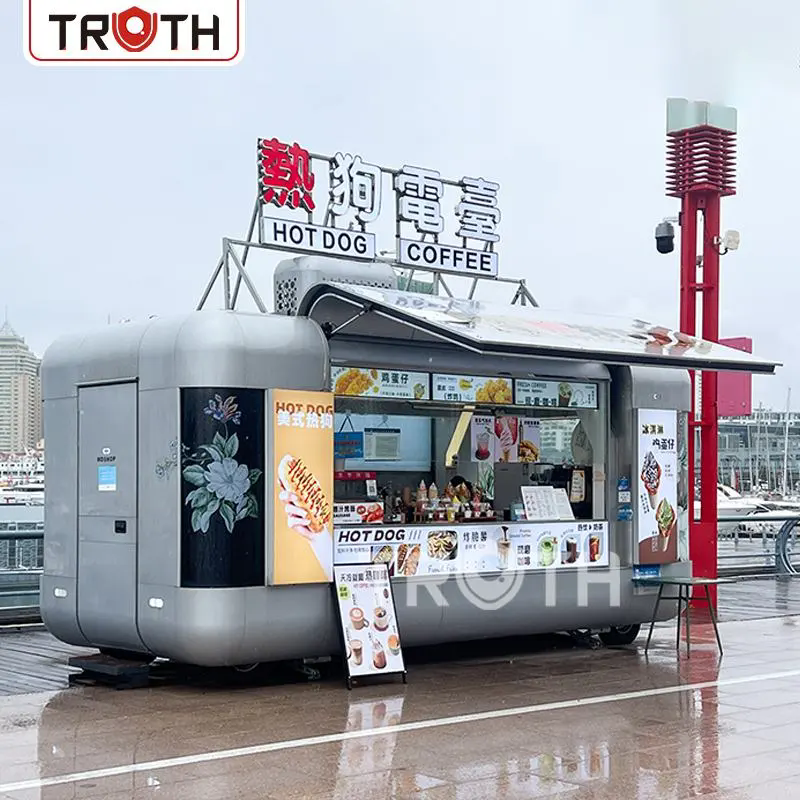
A stainless steel food truck is a practical choice for food festivals and night markets because it combines a cleanable food preparation environment, a durable exterior, and a flexible commercial kitchen layout. These qualities matter in temporary trading locations where operators may serve customers continuously, work in changing weather, transport equipment between venues, and clean the preparation area several times during a single event. For businesses selling hot dogs, burgers, grilled snacks, coffee, or other quick-service food, a well-planned mobile kitchen can make daily operations more organised without requiring a permanent shop.
For event operators, the decision is not simply about choosing an attractive vehicle. The working area must support food handling, cooking, storage, staff movement, power supply, and cleaning within a limited footprint. A properly configured Hot Dog Food Trailer can bring these functions together in one mobile unit. Qingdao Truth Technology Co., Ltd. offers stainless-steel food trailer solutions with customisable sizes, layouts, equipment, and exterior branding, allowing buyers to plan a unit around their menu and target market rather than adapt their business to an unsuitable standard design.
1. Why Does Stainless Steel Suit the Demands of Food Festivals and Night Markets?
2. How Does a Well-Planned Food Trailer Layout Improve Daily Service?
3. Which Product Specifications and Customisation Options Should Buyers Evaluate?
Food festivals and night markets place different demands on a mobile catering business compared with a fixed restaurant. A stall may operate outdoors for several hours, serve a large number of customers within a short period, and move to another venue the following day. During these activities, the interior surfaces are exposed to food residue, cooking oil, moisture, frequent handling, and repeated cleaning. The material used in the preparation area therefore affects more than appearance. It influences how easily staff can maintain the workspace and how consistently the trailer can support daily commercial use.
Stainless steel is widely used in commercial food environments because its smooth surface can be cleaned using appropriate detergents and cleaning procedures. Inside a mobile kitchen, this is particularly useful around preparation counters, work surfaces, storage areas, and other locations where food ingredients or packaging may be handled. Staff can wipe down working surfaces after preparing raw ingredients, remove grease after cooking, and carry out end-of-shift cleaning without dealing with the same maintenance difficulties associated with some porous or easily damaged finishes.
However, the material alone does not guarantee food safety. The final hygiene standard also depends on the surface finish, joints, equipment installation, drainage arrangements, cleaning chemicals, and operating procedures. Buyers should check whether the actual interior design provides accessible cleaning areas and avoids unnecessary gaps where food debris or grease may collect. Food-contact surfaces should be selected and maintained according to the applicable requirements in the destination market.
A mobile food business often experiences more movement and handling than a conventional kitchen. Equipment may be secured before transport, service counters may be opened and closed repeatedly, and staff may move supplies through narrow access points. Exterior panels can also be exposed to rain, dust, road dirt, and accidental contact during loading or unloading. A polished stainless-steel exterior gives a trailer a professional appearance while providing a surface that is practical to wipe down as part of routine care.
The supporting structure is equally important. The product information supplied for Qingdao Truth Technology Co., Ltd. identifies a galvanised chassis as part of its trailer construction. This is a relevant feature for buyers because the chassis supports the body and contributes to the overall towing structure. Nevertheless, the chassis, suspension, coupling, braking system, tyres, and permitted loaded weight must be evaluated as a complete trailer specification. A corrosion-resistant exterior cannot compensate for an unsuitable towing system or an overloaded vehicle.
For an operator attending several events each month, maintenance time can influence business costs. A practical interior should allow staff to complete routine cleaning without dismantling unnecessary components. Smooth stainless-steel work areas can make this process more straightforward, provided the design includes suitable access around equipment and connections. The following points deserve attention when comparing different trailer constructions:
Night markets and outdoor festivals do not always provide the same working environment. One event may take place in a covered market, while another may expose the trailer to wind, rain, or direct sunlight. Stainless-steel surfaces are useful in these settings because they are straightforward to wipe and maintain, but the complete unit still needs suitable weather protection. Buyers should assess doors, serving windows, electrical inlets, ventilation openings, roof joints, and other potential points of water entry.
Cooking operations also create heat, steam, and airborne grease. The ventilation arrangement must therefore match the equipment installed and the cooking methods used. A trailer designed mainly for hot dog preparation may have different ventilation needs from a unit equipped with multiple fryers or a high-output grill. Ventilation capacity should be confirmed against the selected appliances and applicable local requirements instead of assumed from the exterior material.
It is important to distinguish material benefits from complete vehicle performance. Stainless steel does not automatically make a trailer rust-proof, food-safe in every application, or compliant with every country's inspection rules. The grade, thickness, fabrication quality, surface treatment, cleaning method, and surrounding environment all influence performance. The available product information identifies food-grade stainless-steel interiors and a polished stainless exterior, but it does not establish a universal stainless-steel grade or sheet thickness for every configuration.
For buyers comparing suppliers, Qingdao Truth Technology Co., Ltd. can be asked to identify the proposed materials in the quotation and production drawings. This makes it easier to compare like-for-like specifications and avoid paying for assumptions that are not documented. A clear material schedule is especially useful when the trailer will be used in a demanding commercial environment or supplied to a market with defined food-premises requirements.
Ultimately, stainless steel is practical because it supports the everyday tasks that determine whether a mobile kitchen remains presentable and manageable. When its benefits are combined with an appropriate chassis, accessible layout, ventilation, and a realistic maintenance plan, the trailer becomes a more dependable working space for event-based food service.
In a busy festival or night market, service speed depends on how efficiently people, ingredients, appliances, and finished orders move through the kitchen. A trailer can contain high-quality equipment and still perform poorly if staff have to cross paths, reach over hot cooking surfaces, or repeatedly leave the preparation counter to collect supplies. Layout planning should therefore begin with the menu and the sequence of work, not with the position of the serving window alone.
Consider a business selling hot dogs. A typical order may involve retrieving a bun, heating or preparing the sausage, adding toppings, assembling the product, packaging it, and handing it to the customer. Each step needs an appropriate working area. If the cooking appliance is placed too far from the assembly counter, staff may spend unnecessary time moving between stations. If packaging is stored behind the cooking area, employees may have to turn away from the service counter during peak periods.
A practical layout can divide the kitchen into several connected zones:
The exact arrangement depends on the trailer dimensions, number of employees, menu complexity, and equipment footprint. A single-person hot dog operation may need a compact workflow, while a team serving several menu items requires more separation between preparation, cooking, and collection.
The serving window is not just an opening in the exterior wall. Its position affects customer access, order communication, food handover, lighting, and the amount of counter space available to staff. A window placed too close to a cooking appliance may expose customers or employees to unnecessary heat. A window that is too far from the assembly counter may create extra movement during every order.
Before approving a layout, buyers should consider where customers will stand, how queues will form, and whether the serving counter can accommodate payment terminals, menus, condiments, and completed orders. At a night market, lighting around the service opening is also important because customers need to read menus and identify the collection point. LED lighting is among the available customisation options identified in the product information, but its placement and electrical specifications should be agreed during design.
Commercial equipment should be selected according to the food being sold, expected order volume, available utilities, and space. Adding more appliances does not necessarily improve productivity. An oversized equipment package can reduce preparation space, increase power demand, and make cleaning more difficult. A carefully selected group of appliances is usually more useful than a long equipment list that has not been matched to the menu.
| Business type | Potential equipment options | Layout consideration |
| Hot dog stand | Hot dog cooking equipment, grill, refrigerator, preparation counter | Keep cooking, bun preparation, topping assembly, and order collection within a logical sequence. |
| Burger and BBQ stall | Grill, refrigerator, preparation worktop, optional fryer | Allow adequate separation between hot cooking equipment and ingredient preparation. |
| Pizza or baked food business | Oven, refrigerator, preparation counter | Confirm oven dimensions, ventilation, heat management, and required electrical or gas supply. |
| Coffee and dessert business | Espresso machine, refrigerator, worktop, display or storage area | Plan water, drainage, electrical access, cup storage, and customer handover space. |
| Mobile bar | Beer taps, refrigeration, preparation counter | Provide practical access to chilled storage, cleaning points, and serving equipment. |
These are potential equipment arrangements rather than a fixed package. The final equipment list must be confirmed against the buyer's menu, local operating rules, and the trailer's utility capacity. For example, a fryer and a coffee machine may have very different electrical requirements. Their combined demand should be calculated before the electrical system is finalised.
Electrical and gas arrangements should be considered during the layout stage. Moving an appliance after wiring, ventilation, and worktops have been installed can lead to redesign costs. The product information indicates that country-specific electrical systems can be configured for 110V, 220V, or 380V applications. These options should not be interpreted as interchangeable or automatically suitable for every appliance. Buyers need to confirm the local supply, frequency, phase arrangement, appliance ratings, circuit protection, cable sizing, and connection method for the selected market.
Where gas equipment is used, the design should account for the appliance type, gas source, pipe routing, shut-off access, ventilation, and local inspection requirements. The buyer should request the relevant drawings and documentation for the actual configuration. Water supply, wastewater storage or discharge, handwashing facilities, and cleaning arrangements also need to be considered according to the destination authority's requirements.
A layout drawing can look efficient on paper but feel cramped when several people are working inside. Staff need room to open refrigerator doors, access storage, turn safely, and handle hot food. The aisle should not be blocked by removable equipment or supplies during service. Door swings, drawer extensions, appliance handles, and service-window hardware can all affect usable space.
One effective way to evaluate a proposed design is to simulate a complete order from ingredient retrieval to customer handover. Ask where each employee stands, which hand performs each task, where the finished order waits, and how dirty utensils are removed. Then repeat the exercise for the busiest expected service period. This simple operational review can reveal bottlenecks before production begins.
Qingdao Truth Technology Co., Ltd. provides a 3D layout design service before production, which can help buyers review the arrangement of counters, equipment, storage, and serving areas. The value of a 3D design is not merely visual presentation. It gives the buyer an opportunity to check dimensions, identify access conflicts, and discuss changes before the physical unit is manufactured.
For example, an operator may initially request a large refrigerator, a grill, and two preparation counters. A 3D review may show that the refrigerator door interferes with the main aisle or that the second counter leaves insufficient room for staff movement. Adjusting the arrangement at the design stage is generally more straightforward than modifying installed equipment later.
For a business that attends multiple events, the layout should also consider setup and closing procedures. Equipment should be secured for transport, removable items should have designated storage locations, and the serving area should be easy to close. A well-planned Hot Dog Food Trailer is not simply a compact kitchen; it is a work environment designed around the full cycle of preparation, service, cleaning, and movement between venues.
Choosing a mobile kitchen requires more than comparing exterior photographs or advertised prices. Two trailers may look similar while differing considerably in chassis construction, interior materials, equipment capacity, electrical configuration, storage, and documentation. Buyers should therefore request a written specification that describes the actual unit being quoted. This is particularly important when the trailer will be used commercially in another country, where road registration, food premises rules, electrical safety, and gas installation requirements may differ.
The available product information for Qingdao Truth Technology Co., Ltd. describes a customisable stainless-steel food trailer with a food-grade stainless-steel interior, polished stainless-steel exterior, and galvanised chassis. The company offers different body styles, including Airstream mirror-finish and Square vertical-wall designs. Buyers can discuss the trailer size, interior arrangement, equipment package, exterior colour, and branding according to the intended business model.
| Specification area | Available product information | Details to confirm before ordering |
| Interior material | Food-grade stainless-steel interior | Material grade, sheet thickness, finish, and the areas where stainless steel is used. |
| Exterior finish | Polished stainless-steel exterior | Panel material, finish, maintenance instructions, and optional colours or wraps. |
| Chassis | Galvanised chassis | Chassis dimensions, axle arrangement, rated load, coupling, braking system, and towing compatibility. |
| Body style | Airstream mirror-finish and Square vertical-wall series | Overall dimensions, internal usable space, door positions, and serving-window arrangement. |
| Interior layout | Customisable kitchen layout | Worktop dimensions, storage positions, aisle clearance, equipment access, and cleaning access. |
| Cooking equipment | Grills, ovens, fryers, and other commercial appliances can be selected | Brand, model, dimensions, power or gas demand, ventilation needs, and installation requirements. |
| Refrigeration and beverage equipment | Refrigerators, espresso machines, and beer taps are available options | Capacity, power rating, cooling requirements, water connections, and operating clearances. |
| Electrical configuration | Country-specific 110V, 220V, or 380V system options | Frequency, phase, total load, circuit protection, wiring details, and local compliance documents. |
| Lighting and exterior options | LED lighting, branding, logos, wraps, colours, and rooftop platforms | Lighting positions, power supply, mounting details, weather protection, and applicable load limits. |
| Documentation | Export and market-specific documentation support can be discussed | Exact documents, issuing parties, certification scope, vehicle identification, and local registration requirements. |
There is no single size that suits every event business. A compact trailer may be easier to position at a crowded night market, while a larger unit may provide more storage and allow several employees to work simultaneously. However, the usable interior area matters more than the external length alone. Wheel housings, wall thickness, equipment enclosures, doors, and service counters all reduce the space available for actual work.
Buyers should request a dimensioned drawing that includes the external body dimensions, internal working dimensions, serving-window opening, door location, counter height, aisle width, and equipment footprints. The same drawing should identify the position of major utility connections. If the trailer must fit a particular event pitch or transport arrangement, those limits should be shared before the design is approved.
Material thickness and grade also deserve written confirmation. The supplied product details identify food-grade stainless steel but do not specify a universal grade or thickness for every component. Buyers should ask which material is proposed for worktops, wall panels, splash areas, and exterior panels. This prevents an assumption that every part of the trailer uses the same stainless-steel specification.
The Airstream mirror-finish style creates a distinctive curved appearance that can help a business establish a recognisable presence at festivals and outdoor events. Its reflective exterior can be paired with suitable logos or other branding elements. The Square vertical-wall style offers a different visual direction and may suit operators who prefer a more conventional box-shaped commercial layout.
Neither style should be selected on appearance alone. The buyer should compare usable internal space, serving-window dimensions, access, storage, transport requirements, and the restrictions of the intended event sites. A design that attracts attention but leaves insufficient preparation space may create operational problems. Conversely, a straightforward exterior can still provide a strong brand identity through colour, signage, lighting, and a consistent menu presentation.
Equipment selection should follow a clear commercial plan. A hot dog business may prioritise cooking equipment, refrigeration, a preparation counter, and accessible topping storage. A menu that includes burgers and fried sides may need a grill and fryer, with additional ventilation and utility planning. A coffee business may place greater importance on an espresso machine, refrigeration, water arrangements, and cup storage.
Before confirming the equipment list, buyers should prepare a schedule containing the appliance name, manufacturer, model, dimensions, rated power or gas input, connection requirements, and intended position. The supplier can then assess whether the proposed layout and utility system are appropriate. This is more reliable than selecting appliances based only on photographs or general descriptions.
A trailer intended for one country may require a different electrical arrangement from a unit built for another market. The available 110V, 220V, and 380V options provide a starting point for configuration discussions, but the final system must match the local supply and all installed appliances. Circuit protection, grounding, cable routing, external connections, and inspection requirements should be confirmed in the technical documents.
Gas installations require the same level of attention. Buyers should confirm the fuel type, regulator and shut-off arrangements, pipe materials, leak-testing records, ventilation, and the applicable local standards. Any stated support for CE, DOT, VIN customisation, or export documents must be checked against the specific trailer, market, and documentation supplied. A buyer should not assume that one certificate or vehicle document automatically satisfies every local road or food business requirement.
A low initial price may exclude equipment, electrical work, branding, delivery, or documents that are necessary for operation. To compare suppliers fairly, request a quotation that separates the trailer body, chassis, appliances, utility installation, optional features, transport, and documentation. The quotation should also identify what is included in the production drawing and what changes may affect the final cost.
Qingdao Truth Technology Co., Ltd. can discuss custom trailer sizes, interior layouts, equipment packages, exterior finishes, and branding requirements. When reviewing a proposal, buyers should make sure every important choice is recorded in writing rather than relying on verbal descriptions. The approved drawing and specification sheet should become the reference for production and final inspection.
A detailed specification makes it easier to control cost, compare proposals, and identify potential compliance issues before production. It also gives the supplier a clearer understanding of the intended business. For buyers who plan to operate at multiple venues, this preparation can prevent a mismatch between the trailer design and the practical conditions of daily trading.
A stainless steel mobile kitchen is a practical option for food festivals and night markets when its materials, layout, equipment, and utility systems are designed around real operating conditions. Stainless-steel work areas support routine cleaning, a polished exterior helps maintain a professional appearance, and a galvanised chassis provides a defined structural starting point for the trailer. Just as importantly, a well-planned kitchen layout can reduce unnecessary staff movement and make busy service periods easier to manage.
For operators developing a hot dog business or expanding into event catering, a customised Hot Dog Food Trailer can bring preparation, cooking, storage, and customer service into one organised mobile workspace. Truth offers custom sizes, Airstream and Square body styles, equipment options, branding, and pre-production 3D layout design. Contact the team with your menu, target market, preferred dimensions, and equipment list to discuss a configuration that matches your business plan. Request a detailed quotation and technical drawing before placing an order so that the final trailer is aligned with your operational and local compliance requirements.
A stainless steel food truck is suitable for frequent event use because stainless-steel surfaces are practical to clean, maintain, and present in a commercial food environment. The material works well for preparation areas and other surfaces exposed to food residue, moisture, and repeated wiping. A durable exterior finish also helps the unit remain presentable when it is exposed to outdoor conditions and frequent handling. However, overall service life depends on the material grade and thickness, fabrication quality, chassis, equipment installation, maintenance, and operating environment. Buyers should confirm these details for the actual model rather than relying on the material name alone.
Yes. A Hot Dog Food Trailer can be configured around different menus by adjusting the interior layout, worktop positions, storage, serving window, and equipment package. Available equipment options include grills, ovens, fryers, refrigerators, espresso machines, and beer taps, depending on the intended business. Exterior options can include colours, logos, branding wraps, LED lighting, and different body styles. Buyers should provide the menu, staff numbers, venue restrictions, and appliance specifications before the design is finalised. This helps ensure that the equipment, working space, and utility arrangements are suitable for the planned operation.
Buyers should confirm the external and internal dimensions, stainless-steel grade and thickness, chassis and axle specifications, rated load, coupling and braking arrangements, appliance models, electrical ratings, gas installation details, ventilation, water and wastewater arrangements, and required destination-market documents. Electrical systems may need to match 110V, 220V, or 380V supplies, but voltage alone is not enough to establish compatibility. Frequency, phase, total appliance load, grounding, and circuit protection must also be checked. Vehicle registration and food-premises requirements vary by country, so the supplier's documents should be reviewed with the relevant local authority before the trailer is put into service.